
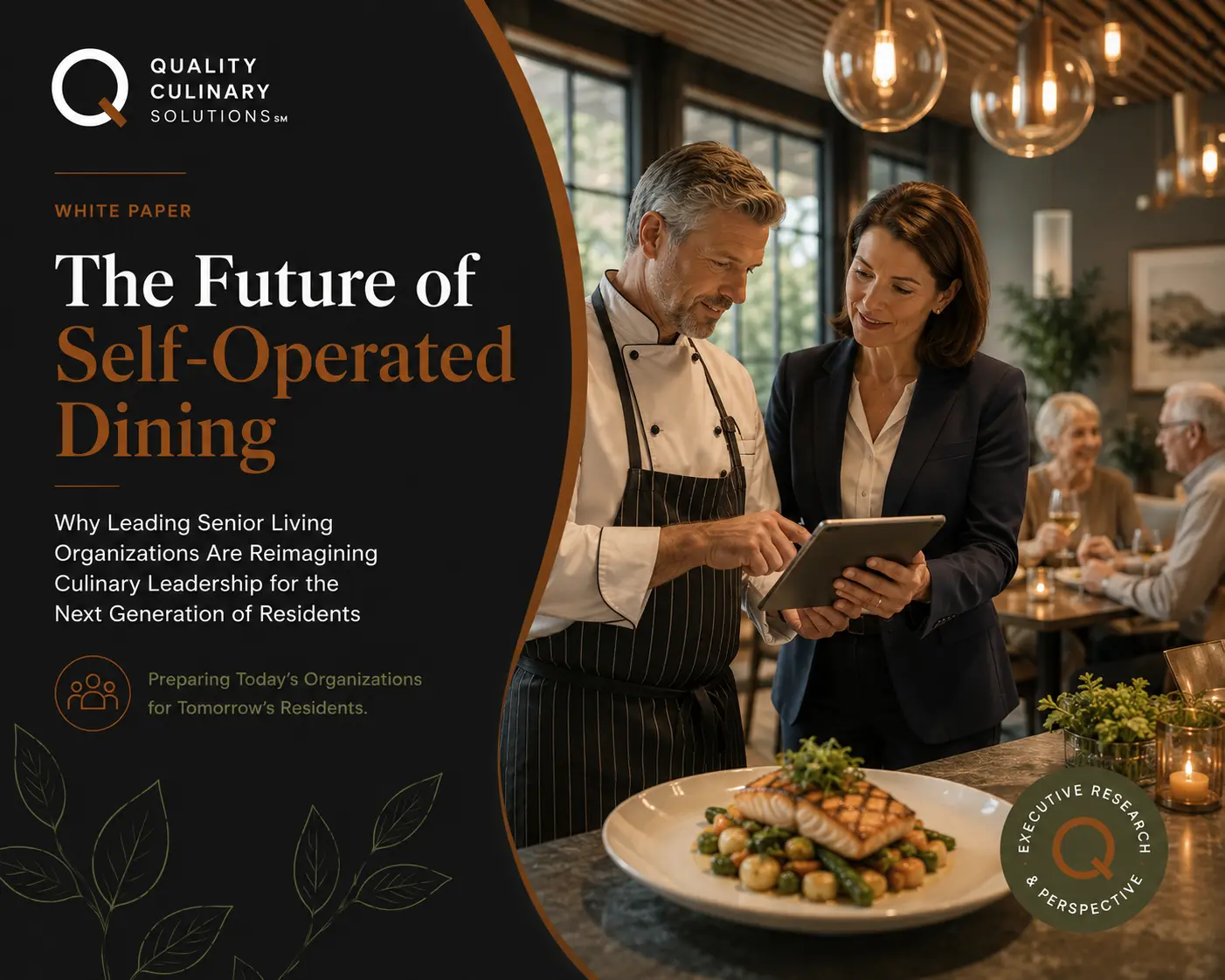
Why Leading Senior Living Organizations Are Reimagining Culinary Leadership for the Next Generation of Residents
Executive Summary
The senior living industry is entering one of the most significant demographic shifts in its history.
Today’s residents expect comfort, familiarity, and consistency.
Tomorrow’s residents will expect personalization, flexibility, hospitality, technology, and wellness—all integrated into their daily dining experience.
For self-operated organizations, this creates both opportunity and responsibility.
The communities that continue to view dining as an operational department may struggle to differentiate themselves.
Those that embrace dining as a strategic function will strengthen resident satisfaction, attract and retain employees, improve operational performance, and reinforce their brand.
This white paper explores how the next generation of senior living dining is evolving—and what organizations should do today to prepare.
The Next Generation of Residents Will Change Everything
The expectations entering senior living are changing rapidly.
Future residents have spent decades experiencing:
- Restaurant-quality dining
- Personalized ordering
- Digital convenience
- Wellness-focused lifestyles
- Global cuisine
- Flexible dining hours
These expectations will not disappear after moving into a community.
Instead, they will reshape what “great dining” means.
Future residents will ask:
Can I choose when I eat?
Can I customize my meal?
Can I dine with friends?
Can I enjoy restaurant-quality presentation?
Does this community reflect my lifestyle?
Dining has become an extension of identity.
From Food Service to Hospitality
Historically, dining departments were designed around efficiency.
Today’s leaders are redesigning them around experience.
Hospitality means every interaction matters:
- Greeting residents
- Presenting meals
- Personalizing service
- Creating atmosphere
- Building relationships
Residents rarely remember food cost percentages.
They remember how dining made them feel.
Culinary Leadership Is Becoming Executive Leadership
Tomorrow’s culinary leaders will be expected to influence:
- Resident satisfaction
- Marketing
- Occupancy
- Wellness
- Workforce culture
- Financial performance
The dining director of the future will need to understand:
- Business strategy
- Data
- Leadership
- Hospitality
- Process improvement
Not simply food production.
Technology Will Become an Enabler—Not the Strategy
Artificial intelligence.
Digital menu management.
Resident feedback platforms.
Business intelligence.
Predictive purchasing.
These technologies are transforming operations.
However, technology alone does not create better dining.
It simply helps great organizations execute better systems.
The organizations that benefit most from technology are those that first establish strong operational foundations.
Five Investments Leading Organizations Are Making Today
1. Hospitality Standards
Creating consistent resident experiences.
2. Leadership Development
Preparing culinary leaders for broader organizational impact.
3. Data Visibility
Making decisions with information instead of assumptions.
4. Operational Systems
Building repeatable excellence across every community.
5. Continuous Improvement
Creating organizations that evolve instead of react.
The QCS Perspective
The future belongs to organizations that intentionally connect:
- Culinary Excellence
- Hospitality
- Operations
- Financial Performance
- Leadership
Dining will become one of the defining competitive advantages in senior living.
Organizations that prepare today will lead tomorrow.
Conclusion
The future of self-operated dining is not about replacing people with technology.
It is about equipping people with better systems.
It is not about serving more meals.
It is about creating more meaningful experiences.
Because tomorrow’s residents will not compare your dining program to another senior living community.
They will compare it to every exceptional hospitality experience they have ever had.